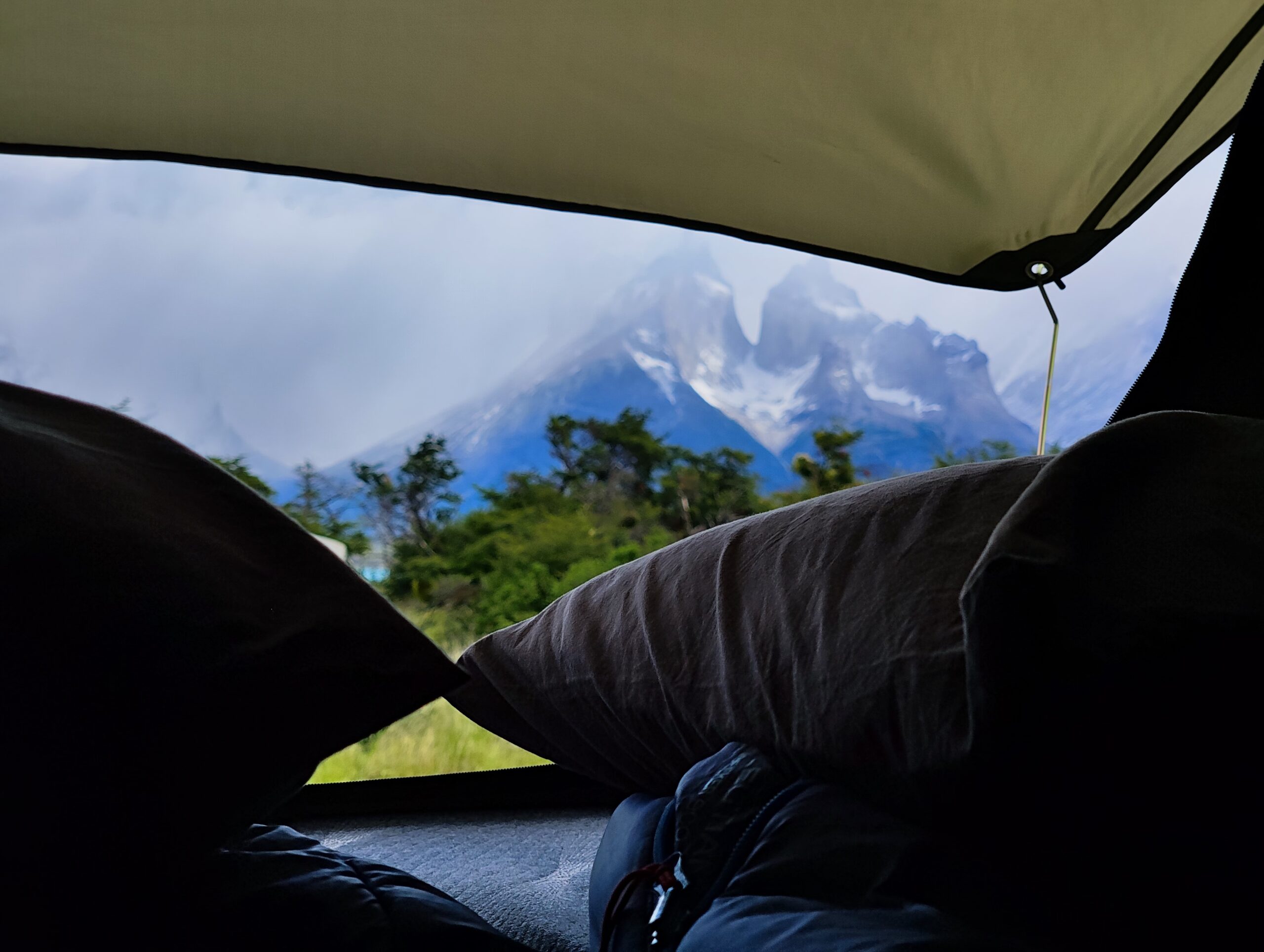
You searched for “glamping.” You found a station with a bed. But what you get is something else.
The bed is good —we’re not ascetics. But that’s not why you’re here. You’re here because the walls are canvas, and canvas doesn’t keep the world out. Our idea of luxury isn’t more. It’s less: less wall between you and the wind, less glass between you and the rain, less distance between you and the moment you realize you are exactly where you needed to be.
Here’s how a night inside the park feels, told through the senses.
Sound — the wind has a name here
The wind in Torres del Paine doesn’t howl. It talks. It presses against the canvas in long, breathy syllables. At first it unsettles you; then, if you let it, it becomes a lullaby. You stop trying to name it. You just listen. You didn’t come to Patagonia for silence. You came to hear something real.
Smell — the earth opens up
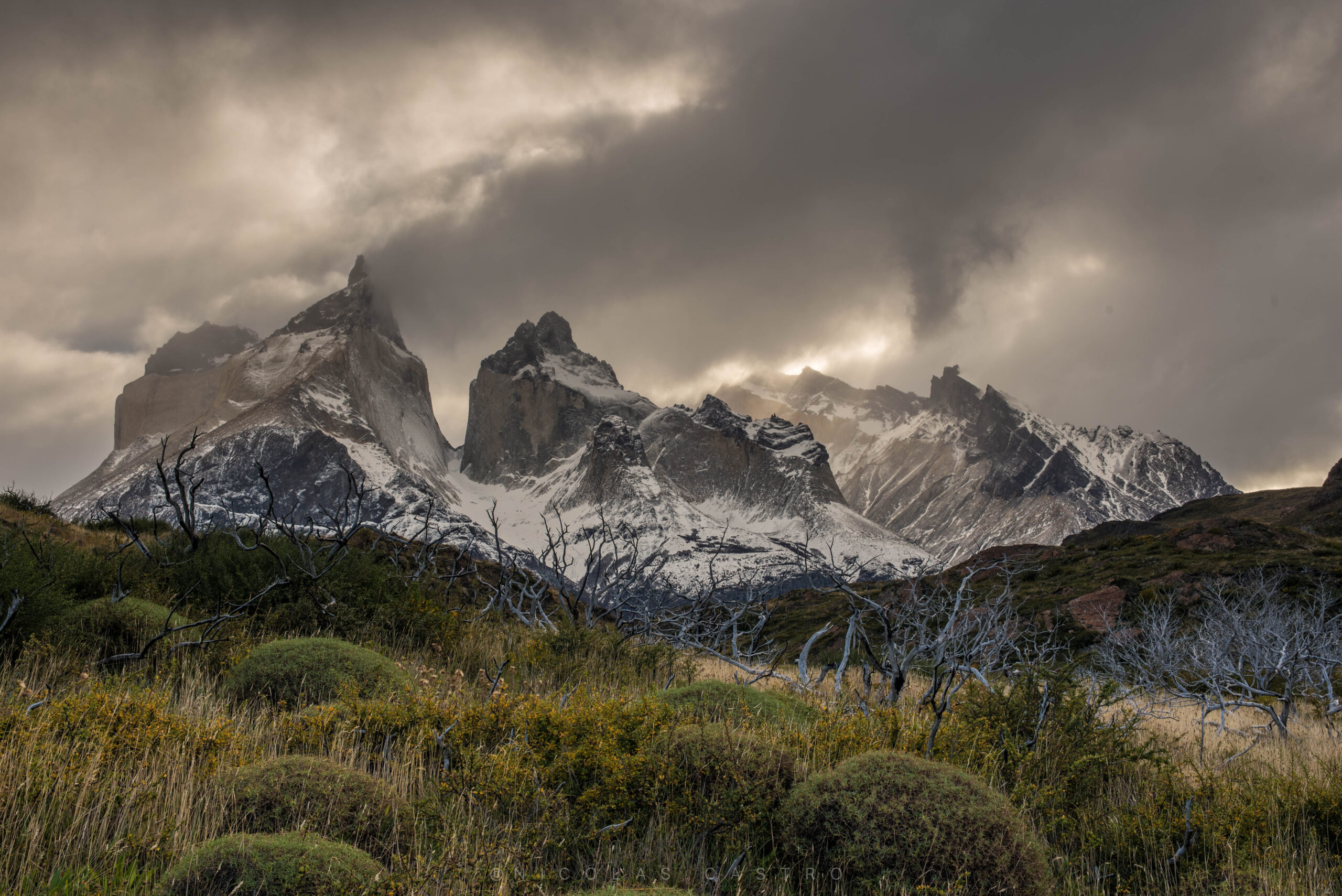
When it rains, it doesn’t fall: it arrives. The drops hit the canvas roof like rhythmic applause. And then the smell comes —wet earth, petrichor, the ground exhaling after holding its breath for days. The mountains disappear into cloud and re-emerge like a memory. Here you don’t watch the rain from a window. You breathe it. You remember you’re made of the same water.
Dawn — the alarm clock you didn't know you needed
There is no snooze button on a Patagonian dawn. The light touches the canvas before you sit up. Austral parakeets chatter in the lenga trees as if arguing about the weather; somewhere high and invisible, a raptor. And if the morning is generous, a very large shadow might cross the sky. You wake not because you have to, but because the world is already awake, and it invited you.
Sight — the canvas frame
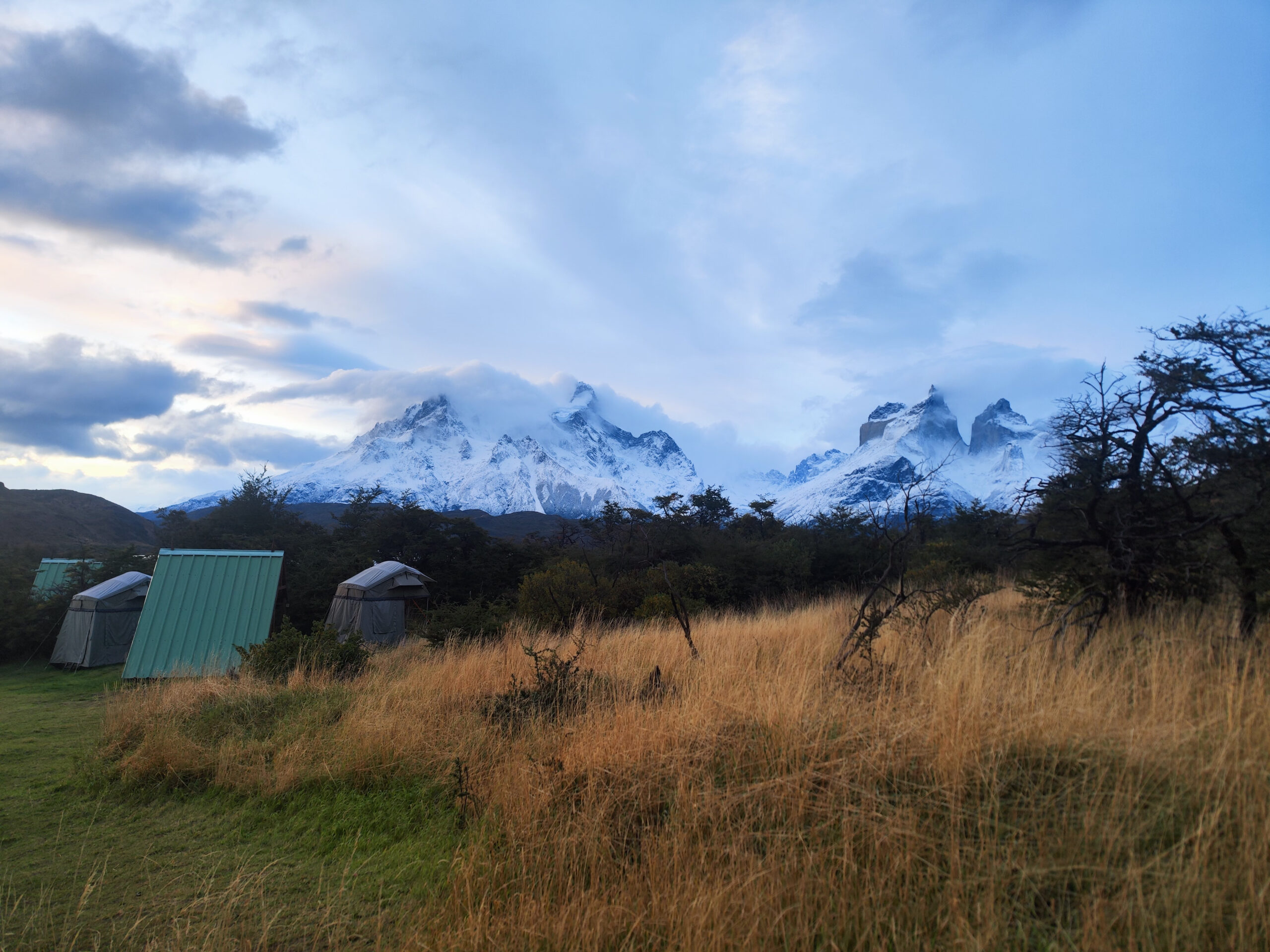
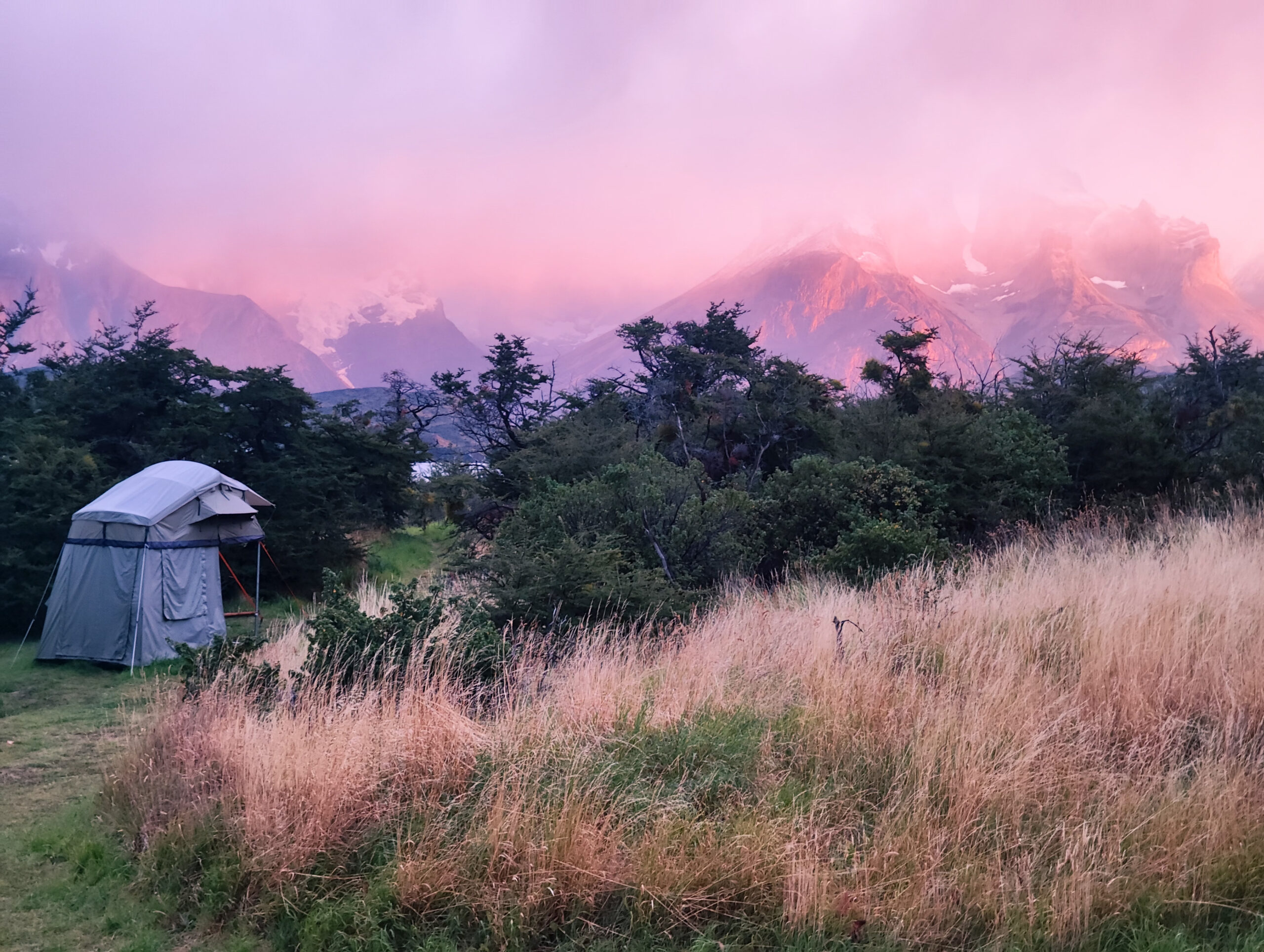
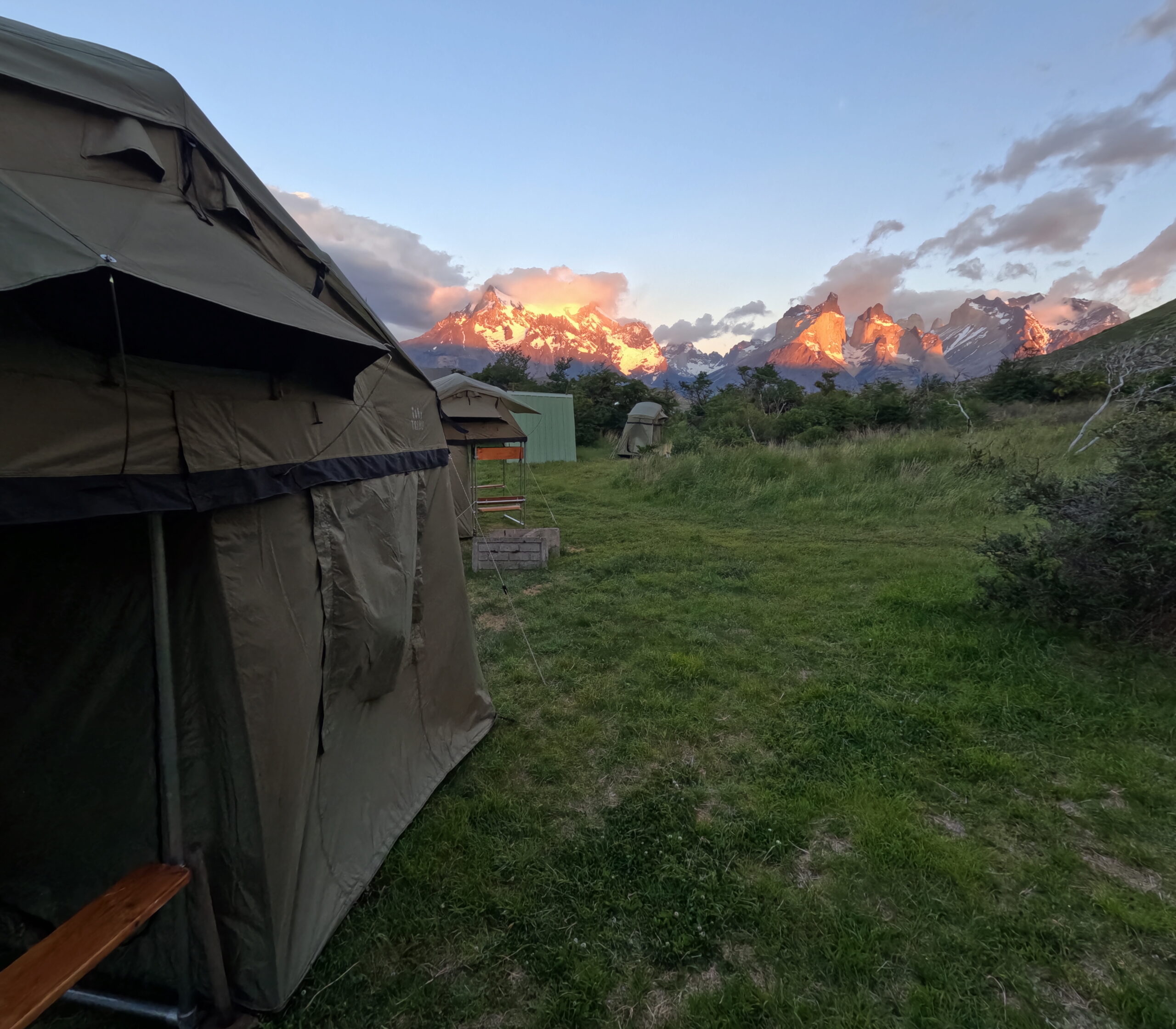
Your station has a window. The best one is the door you leave unzipped. The frame changes every hour: Lake Pehoé shifting from steel gray to emerald, the Paine massif catching fire at sunset, the stars emerging one by one until the sky is crowded. No screen. The only show is the one outside. And at night, the Milky Way is bright enough to cast shadows.
Touch — cold air, warm bed
There is a specific pleasure in being warm when the air outside is not. The bed is good, yes, but the real comfort is the contrast: your face cold, your feet warm, the canvas taut under your palm and, on the other side, a continent of wind and stone. Comfort isn’t about removing difficulty. It’s about choosing the right kind of difficulty.
What we mean by luxury
We didn’t build Yellow Plum Camp Pehoé to compete with hotels. We built it because we believe there’s a kind of wealth that has nothing to do with money: the wealth of waking up knowing exactly where you are, of hearing the rain without reaching for a remote, of looking up and seeing stars instead of a ceiling.
Our stations and domes have what you need. But what they really offer is subtraction. Less glass. Less concrete. Less distance between you and the thing you came here to feel. That’s our luxury: the essentials, made essential again.
If you’re looking for a place where nothing happens, this isn’t it. Things happen here. The wind happens. The rain happens. The dawn happens. The only question is whether you’ll be present enough to notice.
Keep reading
Wildlife experience blog
Trekking blog
Una experiencia de observación integral junto a un guía-tracker local, interpretando huellas, sonidos y comportamientos, con el ecosistema como verdadero protagonista. El puma puede aparecer, pero nunca se promete: aquí, el ritmo lo marca la fauna.
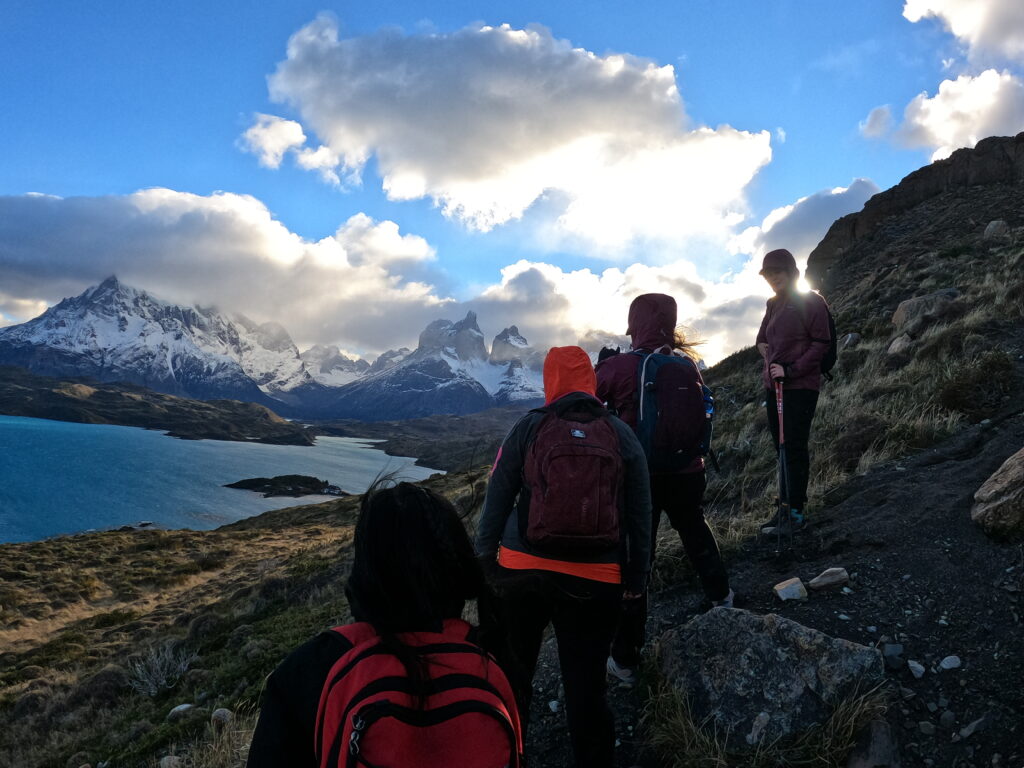
Recorre los lugares más emblemáticos del parque —Mirador Cóndor, Salto Chico, los Cuernos o Base Torres— y accede a navegaciones como Glaciar Grey. Desde paseos suaves hasta jornadas de montaña: aquí, el ritmo lo marcas tú.