The towers get the headlines. But the park is alive in ways you don't plan for.
Most people arrive at Torres del Paine with a mental checklist: puma, condor, guanaco, fox. As if Patagonia were a zoo running on a schedule. And so they spend the day watching wildlife through a viewfinder, collecting sightings, a little anxious when the puma doesn’t appear.
We suggest the opposite. The puma is the prize of the day; the ecosystem is the experience. Once you learn to read the whole living system —what eats what, who cleans up, where the water comes from— you stop needing an animal to show up for the day to be worth it. And, strangely, that’s exactly when you start seeing more.
This guide follows the order in which Patagonia is actually read: not as separate species, but as layers of a single system. The same order a Yellow Plum Camp Pehoé guide walks you through when you head out at dawn.
Act 1
The ground that feeds everything
Before you look for big animals, look at the ground.
That yellow landscape that seems empty isn’t: it’s a pantry. Coirón grass —the tough golden tussock that rules the steppe— turns sun and poor soil into food. It’s the primary producer, the literal base of everything you’ll see later. No coirón, no guanaco; no guanaco, no puma.
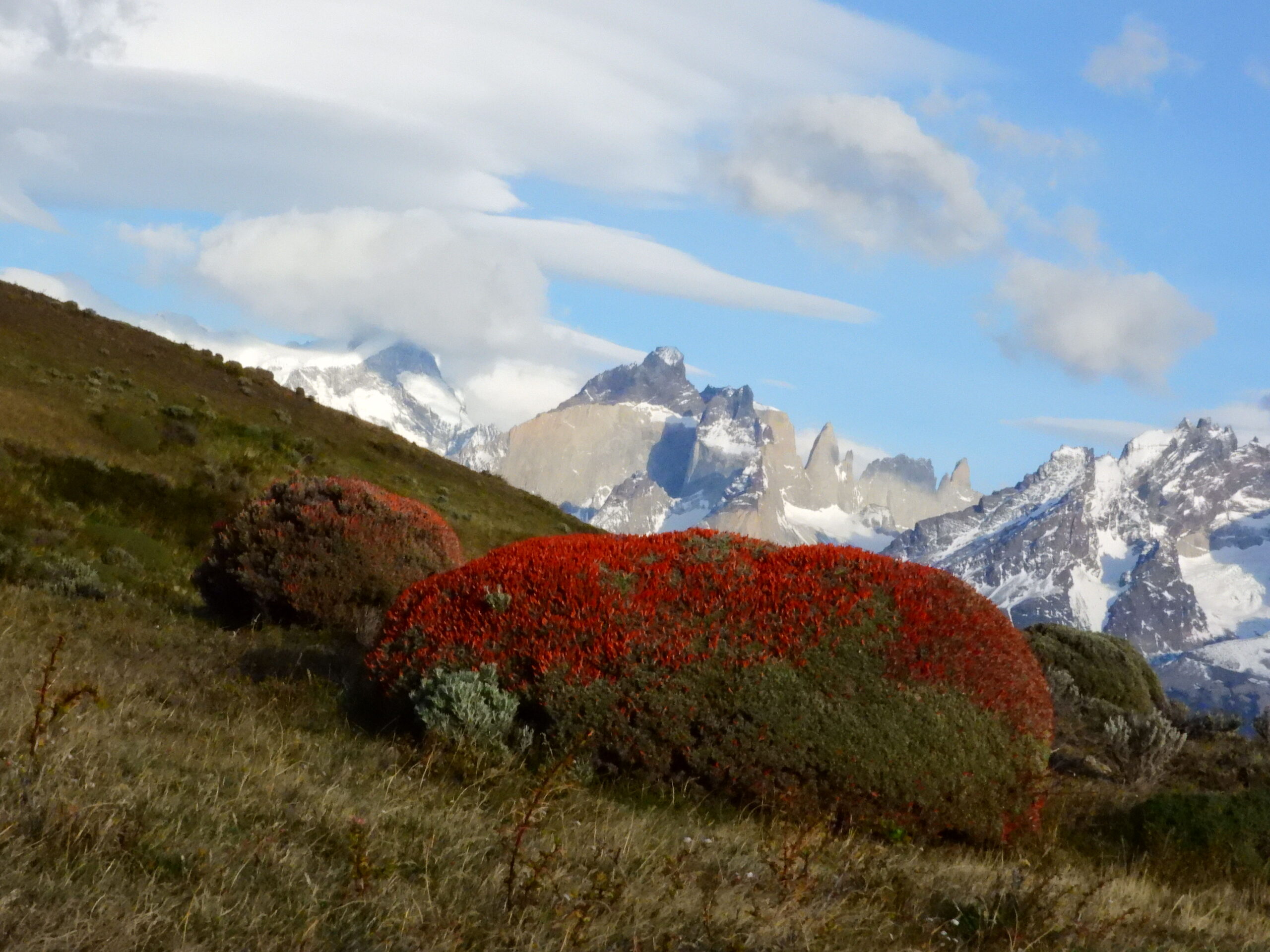
Nearby grows the calafate, the thorny shrub with purple berries that legend says will bring you back to Patagonia if you eat it. In late spring, the notro (Chilean firebush) sets the edge between forest and steppe on fire with its deep-red flower. And the spiny cushion plants grow in tight pillows to survive the wind: the vegetation here takes the shape the wind allows.
Look closely at those tussocks as you walk. If the day is generous, a hare might bolt out from the coirón, or a small lizard might hold still in the sun on a rock. They aren’t the star of the day; they’re the sign that the pantry is full.
The idea is simple, and it changes how you see the rest of the day: the yellow landscape isn’t empty. It’s what holds everything else up.
a detail of the Patagonian steppe —golden coirón tussocks, a calafate shrub with purple berries, or the red of the notro (firebush). Mid-shot, the texture of wind on the grass.
Nearby grows the calafate, the thorny shrub with purple berries that legend says will bring you back to Patagonia if you eat it. In late spring, the notro (Chilean firebush) sets the edge between forest and steppe on fire with its deep-red flower. And the spiny cushion plants grow in tight pillows to survive the wind: the vegetation here takes the shape the wind allows.
Look closely at those tussocks as you walk. If the day is generous, a hare might bolt out from the coirón, or a small lizard might hold still in the sun on a rock. They aren’t the star of the day; they’re the sign that the pantry is full.
The idea is simple, and it changes how you see the rest of the day: the yellow landscape isn’t empty. It’s what holds everything else up.
ACT 2
Who eats whom
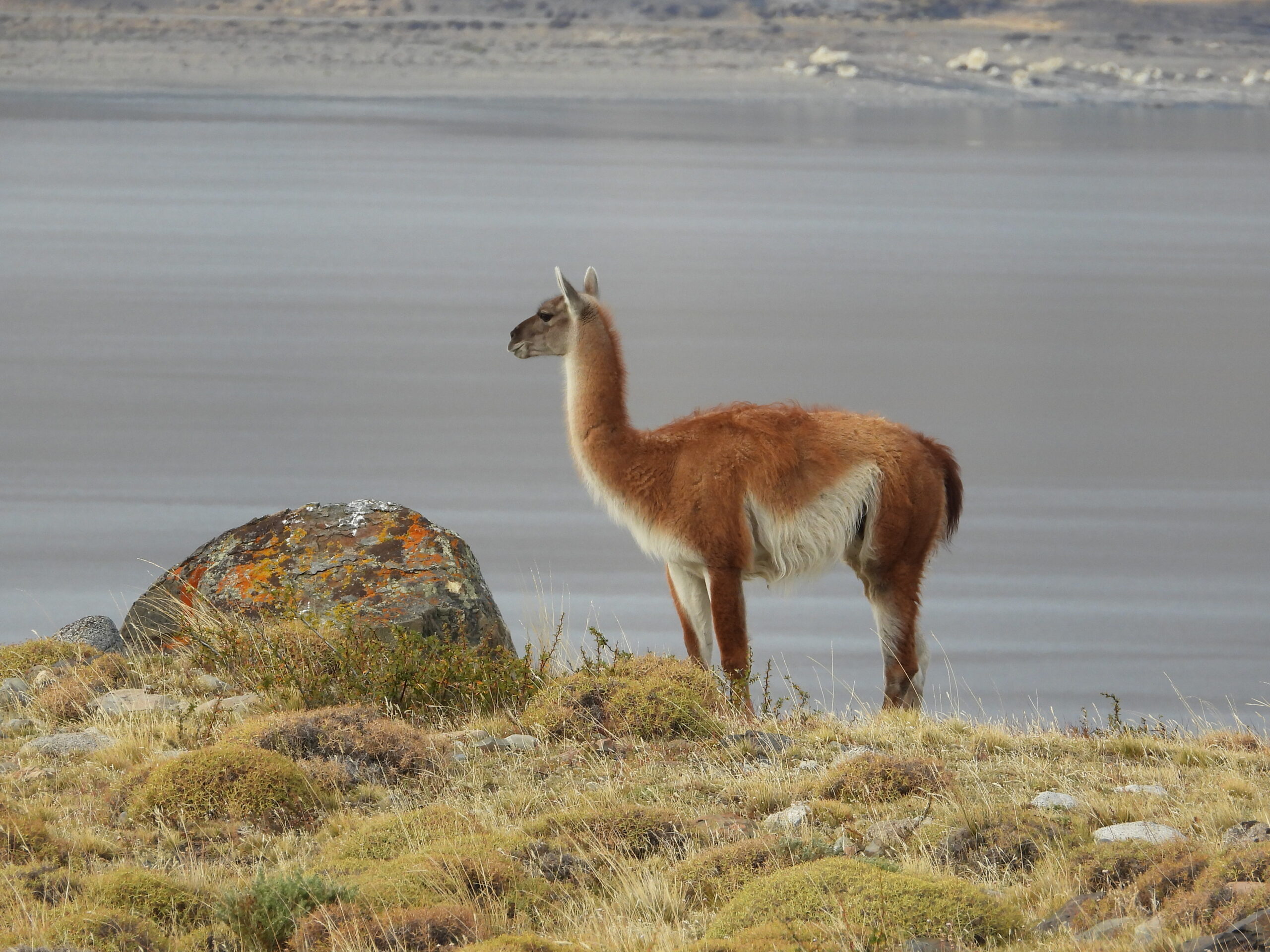
The guanaco is the keystone herbivore of this system, and if you learn to read its behavior, you begin to understand the whole park.
Watch for the sentinel: there’s almost always one standing high and still, keeping watch while the others graze. And listen for its alarm call, a sharp whinny that roughly means “there’s a puma nearby.” That sound isn’t folklore — it’s information. It tells you where to look. Some days the only sign of the puma you’ll get is that call and, maybe, a guanaco carcass among the grass. That’s seeing it, too — without seeing it.
Because the puma is never promised, never chased, never lured. You read it through traces: tracks with no claw marks (they’re retractable), a kill covered with grass, the nervous behavior of the guanacos. And when it appears —if it appears— you watch from a distance, with the animal’s wellbeing above the photograph. Always.
It’s worth saying what the puma actually does here: it regulates the guanaco population. Without it, the steppe gets overgrazed. It’s not the villain of the story; it’s what keeps the balance. And it isn’t the only hunter: at dusk, if the day is generous, a culpeo fox may appear at the edge of the road, unhurried, before slipping into the brush. A reminder that the chain has many more links than the puma-guanaco pair.
Because pumas are free, and they are not guaranteed. What we do guarantee: waking up in their territory, Patagonian wildlife all day, and a guide who teaches you to read it.
Yellow Plum Patagonia
ACT 3
Quién limpia
Look up, and find the big shadow.
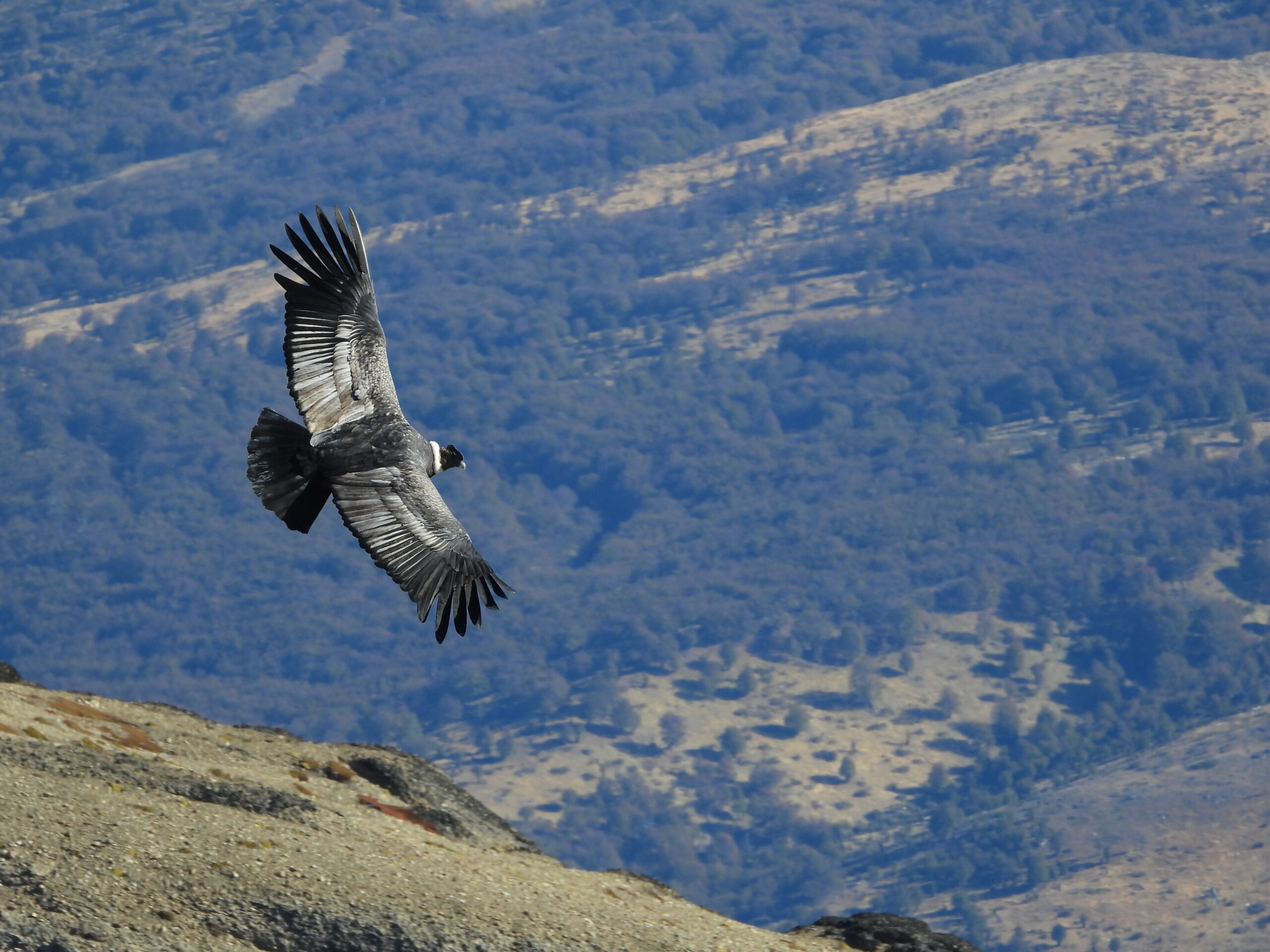
The Andean condor isn’t a hunter: it’s a scavenger, and that’s why it closes the cycle. What the puma leaves, the condor returns to the system. With a wingspan of nearly three meters, it glides for hours without flapping, riding the thermals that rise off the exposed slopes. If the wind climbs the right slope at the right moment, you might see that shadow pass over you —a moment you don’t forget. “The condor doesn’t kill: it cleans. That’s why the guanacos don’t fear it.”
It isn’t the only one reading the land from the air or the grass. The rhea (ñandú) runs across the steppe —and it’s the male who incubates and raises the chicks. The upland goose mates for life: white male, brown female. The black-faced ibis probes the soil with its curved bill. And if the day moves into the lenga forest, listen before you look: the chucao is heard before it’s seen, and the drumming of the Magellanic woodpecker —the red-headed one— is the sign of a healthy forest. Catching one hammering a trunk is one of those things you can’t plan for.
The idea of this act: nothing is wasted. The death of one feeds many.
Act 04
El agua que lo mueve todo
We began by looking at the ground. We end by looking at the ice.
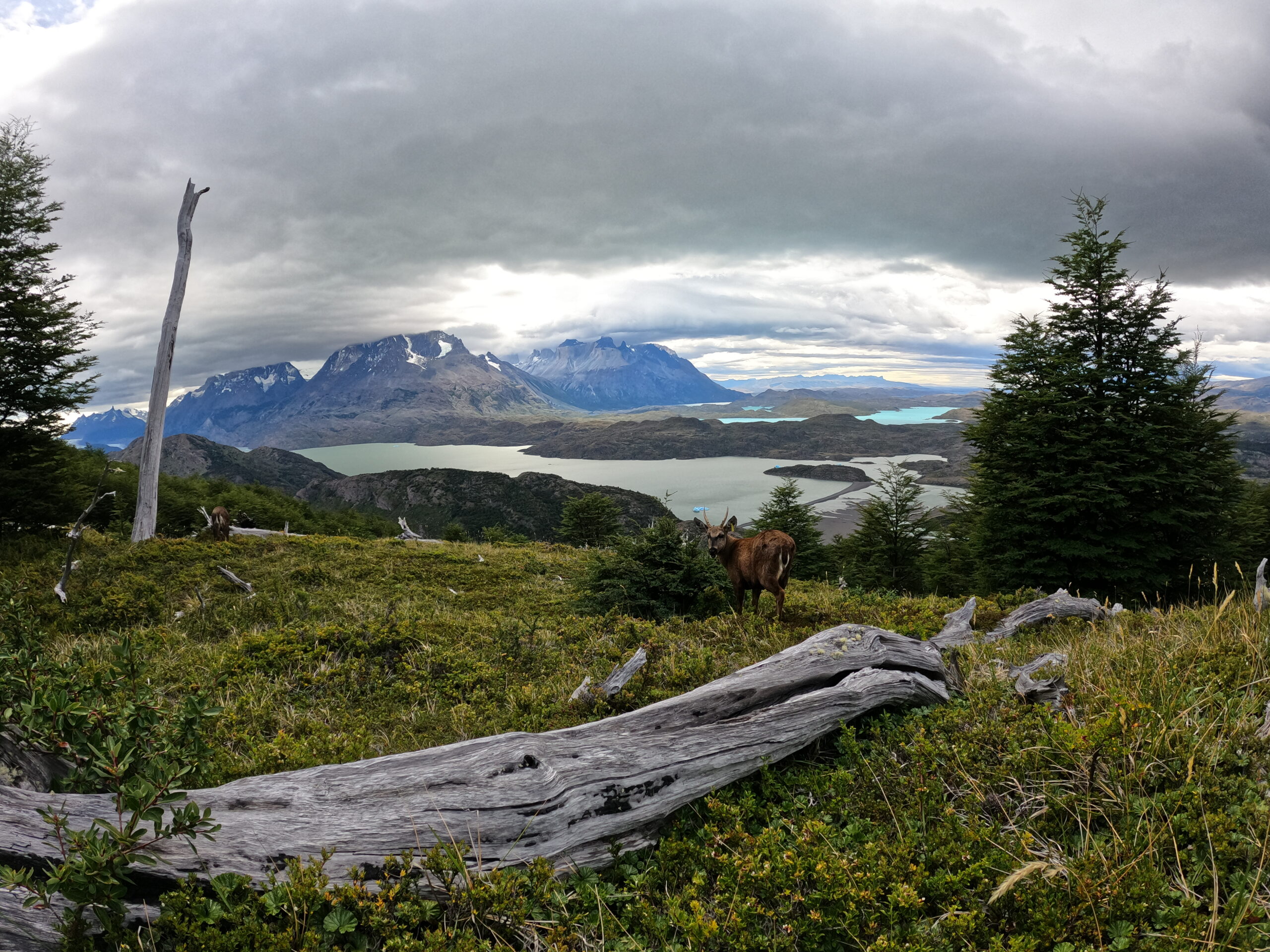
That impossible turquoise of the lakes —Pehoé, Nordenskjöld— isn’t dye. It’s rock flour: ultra-fine glacial sediment, mountain literally ground up and suspended in the water, reflecting light that way. Grey Glacier and the Southern Patagonian Ice Field store and release the water that fills those lakes, that waters the coirón, that feeds the guanaco… that sustains the puma. The circle closes where it began.
In the lagoons and wetlands along the way, if you’re lucky, the water returns the favor in color: the pink of a group of Chilean flamingos filtering the mud, or the silhouette of a black-necked swan gliding without a sound. Never in the same place, never on command —but there, for whoever looks.
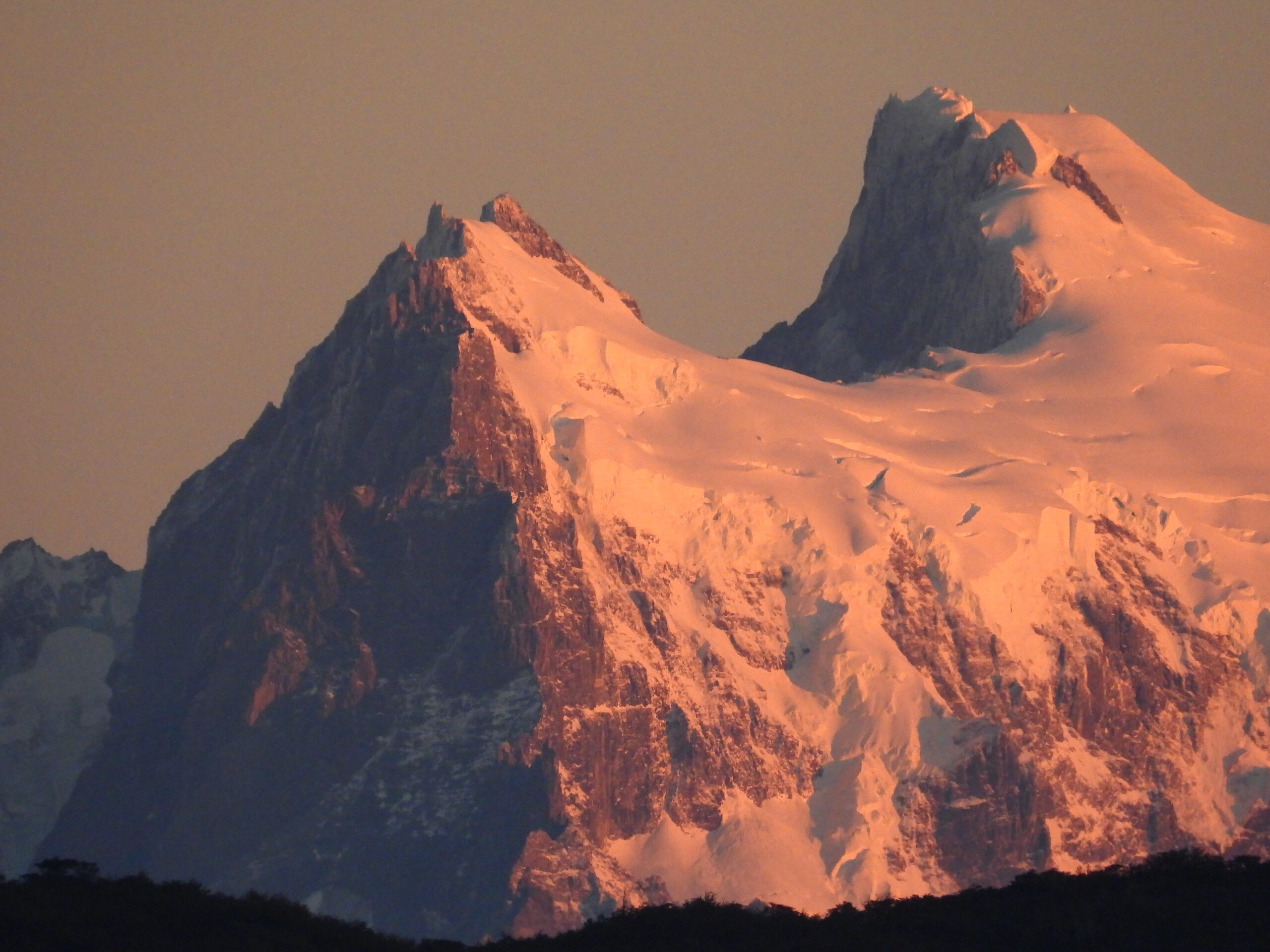
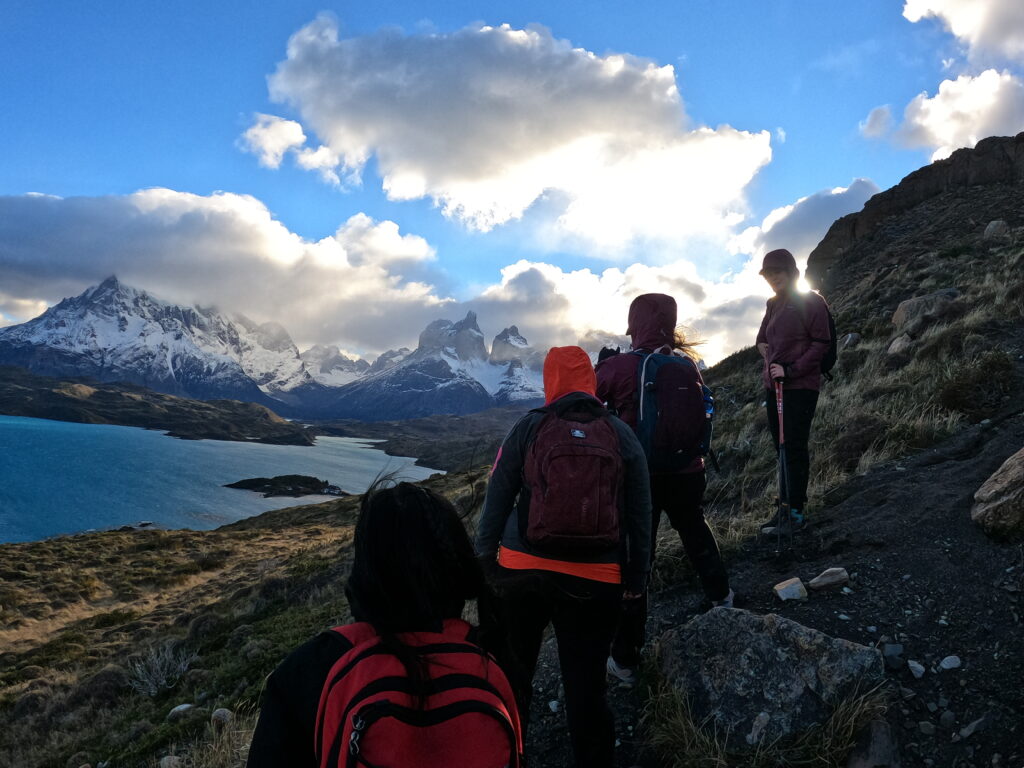
Above it all rises the Paine Massif: pale granite formed underground, crowned by the older, darker sedimentary rock that forms the Cuernos (the Horns). The mountain that gives the park its name is, also, part of the system you’re learning to read.
The way we watch wildlife
All of this rests on an ethic that, for us, is identity — not fine print.
We never promise sightings.
We keep the minimum distances —always— even when it costs the photo.
We don't feed, lure, or chase any animal.
We travel only authorized routes.
And we log what we see, because every outing feeds the record that helps monitor the park's wildlife.
Why it reads differently from the inside
The difference of sleeping inside the park isn’t comfort. It’s time and light.
Almost every wildlife tour leaves Puerto Natales between 4:30 and 6:00 a.m. and loses an hour to an hour and a half of driving each way, arriving when the dawn light —the best for wildlife— is already gone. From Yellow Plum Camp Pehoé, you’re already in the territory while everyone else is still on the road. The safari starts where you wake up.
An honest seasonal note: this version —wildlife from your tent, inside the park— is the one for the months with the glamping open, October to mid-April. When the camp rests (April 15th to October 1st), we bring the same spirit and the same team to our Wildlife Experience from Puerto Natales, which runs year-round —and which happens to fall in the best puma season, when the snow makes it more visible. Two modes, one way of seeing.
And if you didn’t see the puma today, you lost nothing. You saw its entire home. And you learned to read it.
Keep reading
El lujo de lo esencial blog
Trekking blog
Una experiencia de observación integral junto a un guía-tracker local, interpretando huellas, sonidos y comportamientos, con el ecosistema como verdadero protagonista. El puma puede aparecer, pero nunca se promete: aquí, el ritmo lo marca la fauna.
Recorre los lugares más emblemáticos del parque —Mirador Cóndor, Salto Chico, los Cuernos o Base Torres— y accede a navegaciones como Glaciar Grey. Desde paseos suaves hasta jornadas de montaña: aquí, el ritmo lo marcas tú.